You could walk past it once and see trees, animals and figures from the past. Look again, and you begin to realise just how much New Forest history has been stitched into this remarkable piece of work.
The New Forest Embroidery, on display at the New Forest Heritage Centre in Lyndhurst, tells centuries of the New Forest’s story through an extraordinary collection of people, places, wildlife and events.
Let’s take a closer look at what you can actually find within it. And there is a lot to spot.
Here’s just some of what you’ll find in the first half…
Where the New Forest story begins
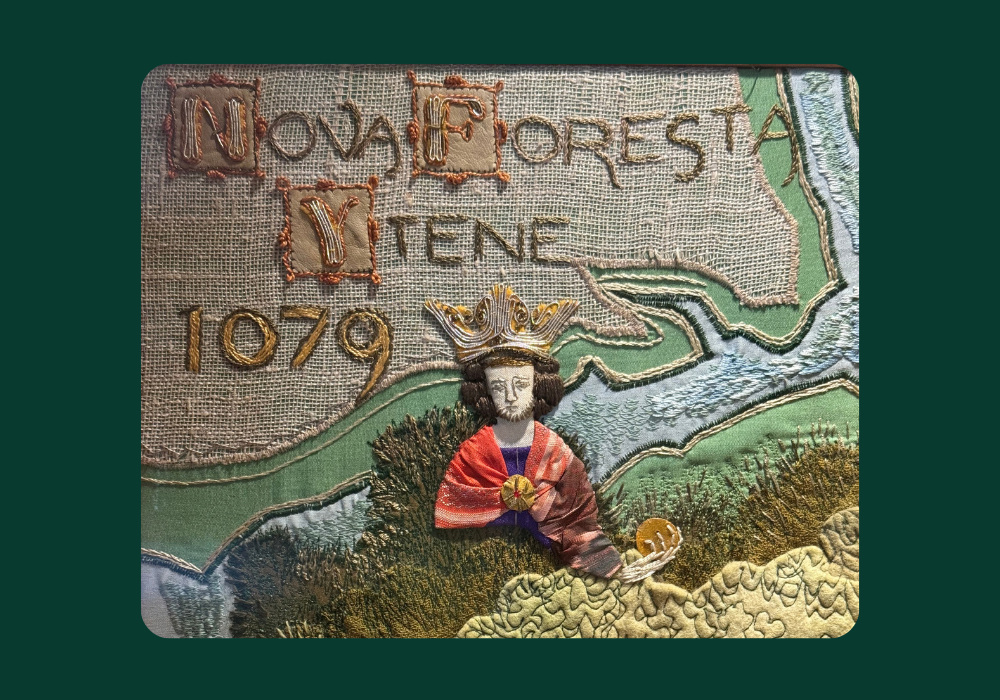
The story starts in 1079, with William the Conqueror and the creation of the Nova Foresta as a royal hunting ground.
Look towards the top of the Embroidery and you’ll find King William I presiding over his newly established New Forest. But look closer and the smaller details begin to appear too: a nightingale among the branches, a red admiral butterfly and chanterelle mushrooms growing on the ground below.
It sets the tone for the whole Embroidery. This isn’t simply a timeline of kings, battles and buildings. The wildlife and landscapes of the New Forest have their own story running through it too.
The death of William Rufus
One of the New Forest’s best-known stories appears next.
In 1100, William II - better known as William Rufus - was killed by an arrow while hunting in the New Forest. The exact circumstances of his death have been debated for centuries, and the Embroidery captures the story in wonderful detail.
William Rufus is shown falling from his horse, while Sir Walter Tyrrell, traditionally held responsible for firing the fatal arrow, appears nearby.
There are other clues to hunt for too. The Domesday Book sits among the branches, names including Linhest, Broceste, Bovre and Truham reference New Forest manors, and several local religious houses are represented.
And, of course, the Rufus Stone itself appears later in the Embroidery.

Beaulieu Abbey and King John
The story then moves into the 13th century and Beaulieu Abbey.
King John founded the Cistercian abbey in 1204, bringing monks from Cîteaux in France to establish what became the Abbey of St Mary of Beaulieu.
Once again, history sits alongside nature. Around the scene you can spot a heron, dragonfly, brimstone butterfly, common snipe and even a sundew - one of the New Forest’s insect-eating plants.
The rights that still shape the New Forest
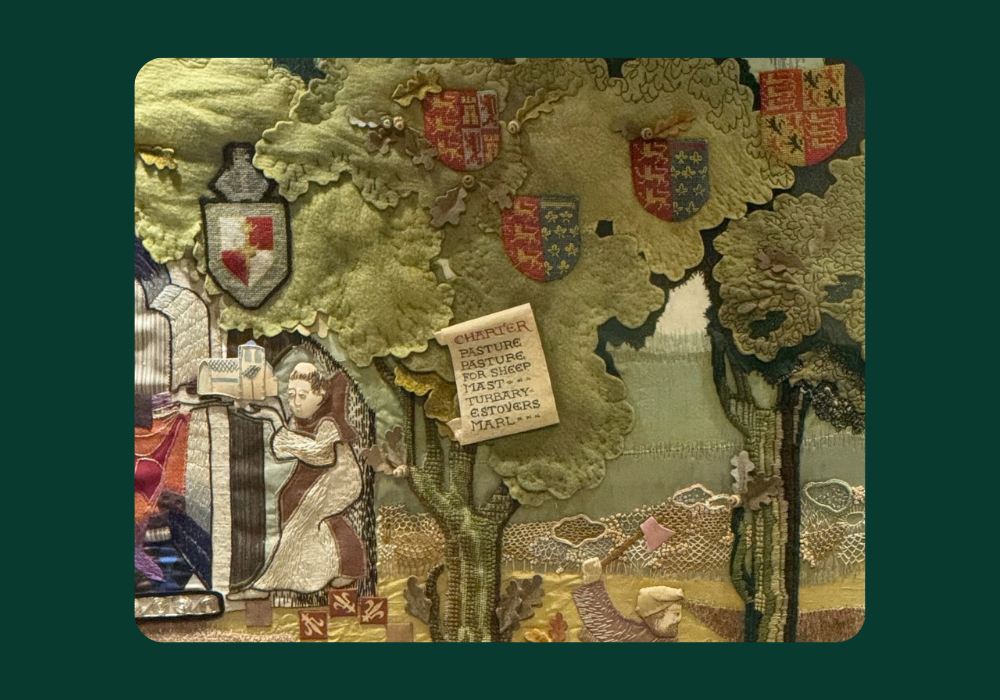
One of the most fascinating sections explores the Charter of the Forest, granted by Henry III in 1217.
The Charter relaxed some of the strict Forest laws and the Embroidery records the ancient common rights that became such an important part of life here.
Among them is pannage - the right to turn pigs out to feed on fallen acorns and beech mast. It’s a tradition that continues in the New Forest today and remains one of the most distinctive sights of autumn.
Look carefully and you'll find the other common rights represented too, alongside plants, animals and references to the New Forest’s growing importance as a source of timber.
Royal stories, Beaulieu and Hurst Castle
Moving through the centuries, the Embroidery brings another dramatic chapter of English history into the New Forest.
In 1471, Margaret of Anjou, wife of Henry VI, landed at Weymouth with French forces during the Wars of the Roses. Following the defeat of her army, she is believed to have sought shelter at Beaulieu.
Later, following the Dissolution of the Monasteries, Beaulieu passed into the hands of Thomas Wriothesley, Earl of Southampton. Stone from the former abbey buildings was reused elsewhere, including in the coastal defences of Hurst Castle and Calshot Castle.
It’s a brilliant example of what makes the Embroidery so interesting: places we still know today are woven into much bigger moments in British history.
Pigs, ponies and some very familiar New Forest faces
Not everything depicted is a king or historic landmark.
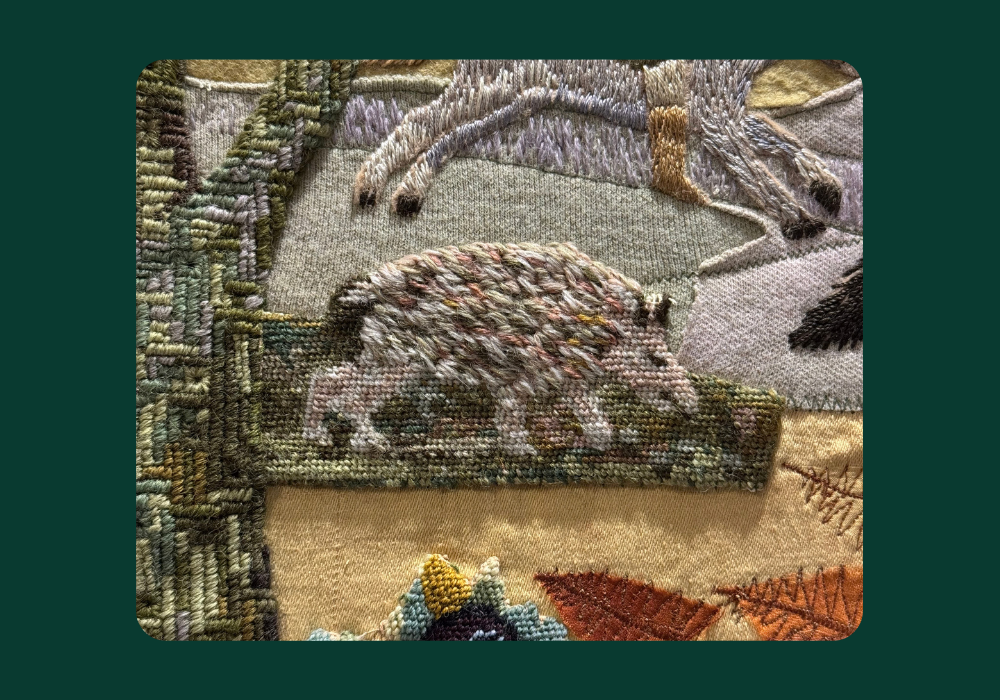
A pig heads out for pannage. A New Forest pony appears beneath the trees. Birds fill the branches and woodland floor, while butterflies, snakes, flowers and fungi are hidden throughout.
Some species are much harder to find in the New Forest today. A black grouse appears in one scene, a bird which has since disappeared from the area, while other sections feature Dartford warblers, woodpeckers, curlews and birds of prey.
You could spend a long time simply spotting the wildlife stitched between the historical scenes.
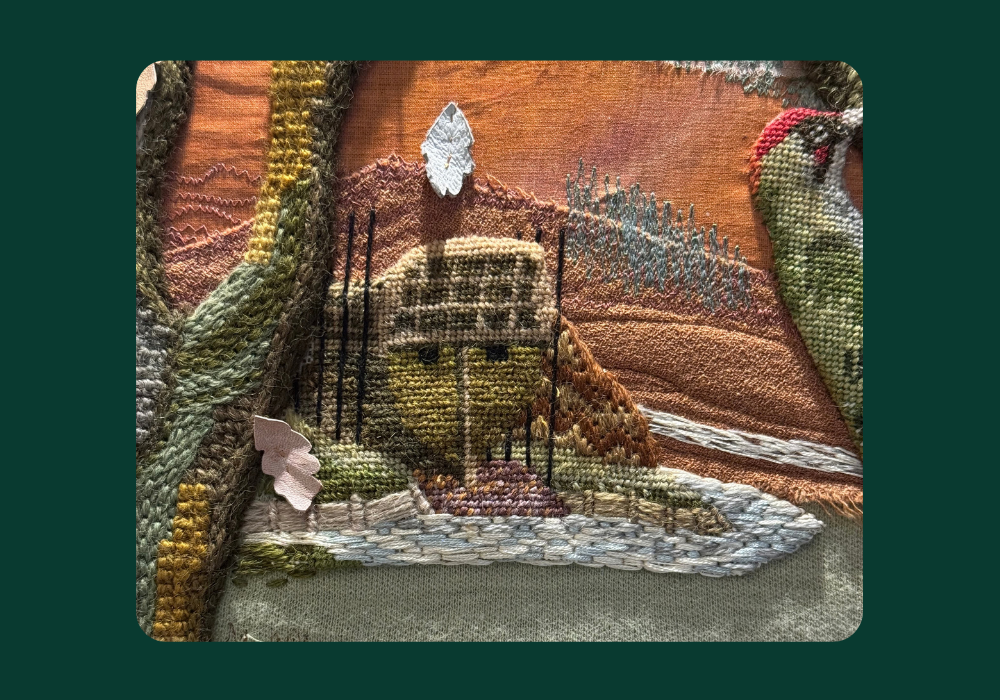
From woodland to warships
As the Embroidery moves through the 18th century, the New Forest’s relationship with timber and shipbuilding comes to the fore.
At Buckler’s Hard, around 50 ships were built between 1743 and 1818, including vessels that went on to serve in the Royal Navy. Building them required huge quantities of timber, and the Embroidery reflects the changing New Forest landscape as new areas of woodland were planted to meet demand.
Look closely and, as always, there’s wildlife woven into the story too - with birds including a jay, woodpecker, honey buzzard and the now locally extinct black grouse hidden among the trees.
See the details for yourself
And this is only part of the story.
What makes the New Forest Embroidery so special isn't simply the major historical events it records. It’s everything happening around them: the tiny birds hidden in trees, familiar New Forest plants, ancient traditions, local landmarks and small references that are incredibly easy to miss on a first look.
The real thing gives you the chance to get close and see just how much has been packed into every section.
You can see the New Forest Embroidery at the New Forest Heritage Centre in Lyndhurst and find out more about its story on our New Forest Embroidery page.
Next week, we’ll be taking a closer look at the second half of the Embroidery and continuing the story of the New Forest.