Last week, we explored the first part of The New Forest Embroidery, on display at the New Forest Heritage Centre in Lyndhurst, travelling from William the Conqueror and the creation of the Nova Foresta through centuries of royal history, commoning, shipbuilding and the arrival of the railway.
But the story doesn't stop there.
As we move into the later sections of the Embroidery, the New Forest begins to look increasingly familiar. There are places we still visit, traditions that continue today and some brilliant characters and stories hidden among the trees.
Here are some of the details to look out for in the second half.
The railway arrives in the New Forest
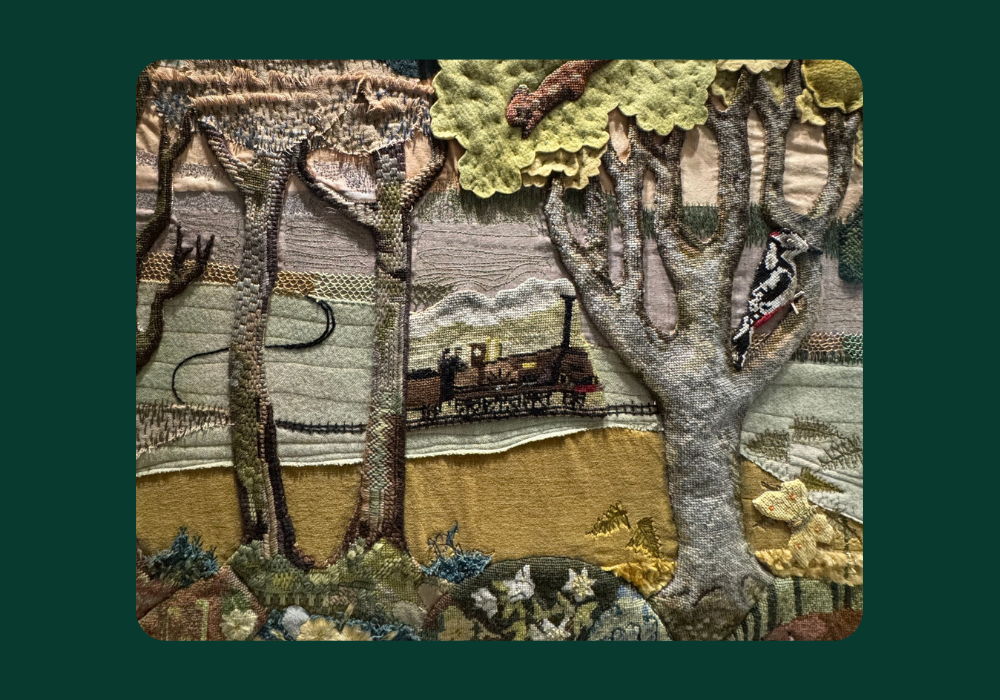
We pick up the story in 1847, with the arrival of the railway in the New Forest.
Look closely at the Embroidery and you’ll spot a steam engine making its way through the landscape, marking the beginning of a new era. The railway brought significant change to the New Forest, making the area more accessible and connecting its communities with places further afield.
From here, the Embroidery moves into a period of New Forest history filled with fascinating local characters, changing landscapes and, eventually, the impact of two World Wars.
The New Forest's famous snake catcher
Some of the best stories in the Embroidery aren't about kings or major historical events at all.
One of its most memorable characters is Brusher Mills, the famous New Forest snake catcher.
Born in 1838, Brusher spent much of his life living and working around Brockenhurst and became known for catching snakes in the New Forest. The Embroidery depicts him with some of the tools of his trade - and even shows a snake beside him.
Alongside Brusher is another important New Forest figure, Gerald Lascelles, Deputy Surveyor from 1880 to 1915, pictured holding a hawk.

Alice in Wonderland - in Lyndhurst
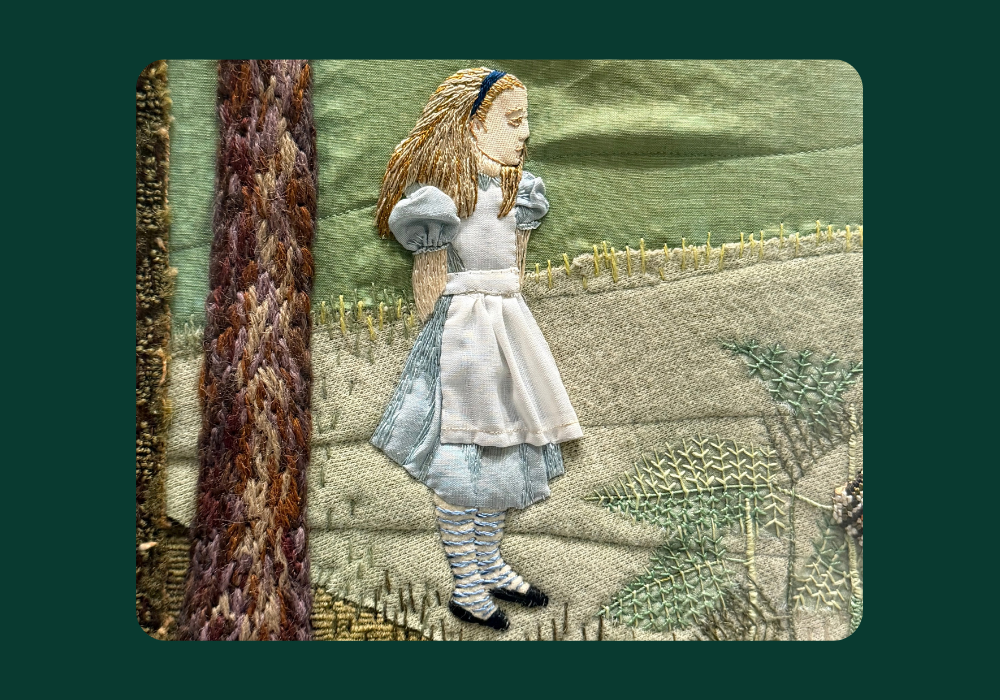
Look closely at another section and you might spot a little girl standing in a woodland glade.
It's Alice Hargreaves - the Alice who inspired Lewis Carroll's Alice in Wonderland.
Alice spent the later years of her life in Lyndhurst and is buried in the family vault at St Michael and All Angels Church, which also appears in the background of the Embroidery.
She's surrounded, fittingly, by New Forest wildlife - including a white admiral butterfly, tawny owl, badger and grass snake.
The New Forest at war
The New Forest played an important role during both World Wars, and those years are represented throughout the Embroidery.
Military camps and training grounds were established across the area, with airfields at Holmsley, Stoney Cross and Beaulieu.
Look up and you'll also find one of the most striking details in this section: a Spitfire.
The aircraft has a particularly strong local connection. Many Spitfires were developed and built in nearby Southampton, and the Embroidery records the story of Flight-Lieutenant James Nicolson, who was awarded the Victoria Cross following a dogfight over Lyndhurst in August 1940.
A new challenge for the New Forest
As the Embroidery reaches more recent history, the threats facing the New Forest begin to change.
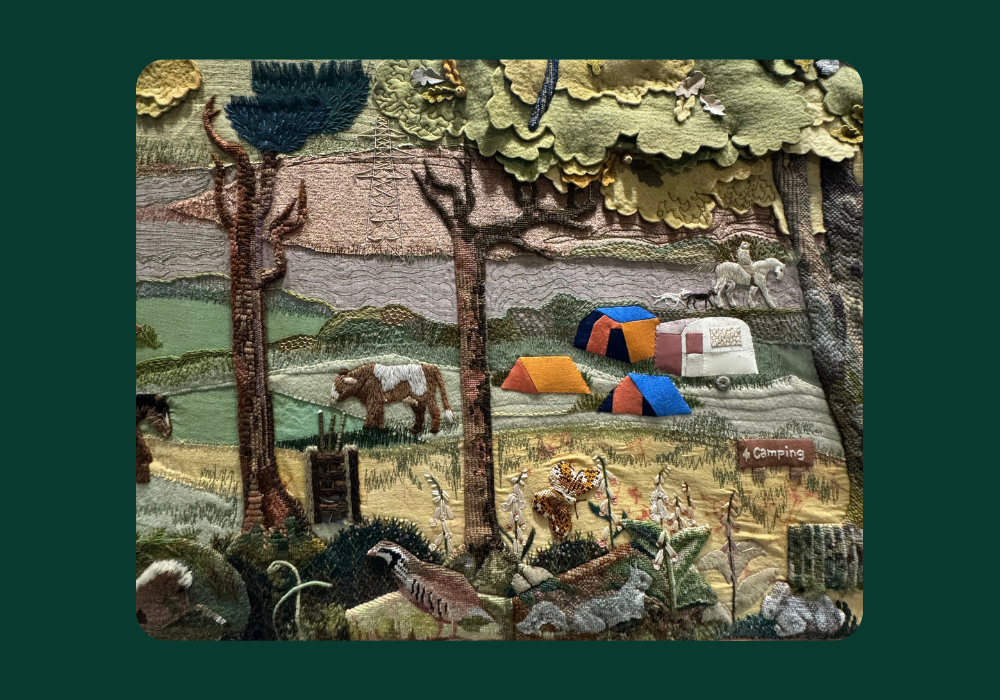
Industrial development appears on the skyline. Electricity cables cross the landscape. Increasing numbers of cars bring new pressures, with roads becoming more dangerous for the free-roaming animals.
But the Embroidery also shows the response.
Conservation studies, controlled camping and car parking, and barriers designed to prevent vehicles from damaging the open New Forest all begin to appear.
Suddenly, this isn't simply history. Many of the challenges depicted here are ones we still recognise today.
The Knightwood Oak and 900 years of the New Forest
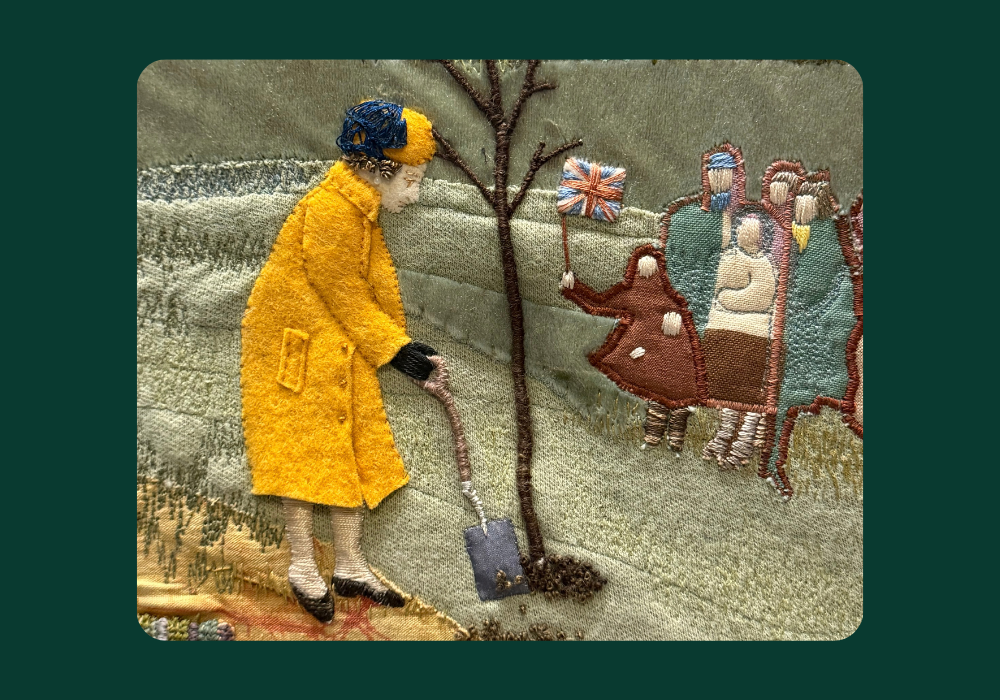
One of the final landmarks depicted is the Knightwood Oak, one of the New Forest's oldest and best-known trees.
The Embroidery was created to commemorate the 900th anniversary of the New Forest in 1979, and this part includes the planting of a commemorative tree by Queen Elizabeth II on 12 April that year.
There is another rather special figure nearby too.
Riding a grey horse called Allah is Belinda Montagu, the artist who designed the Embroidery itself, accompanied by her dogs Snowy and Ink.
After centuries of kings, commoners, wildlife, war, industry and change, the creator has quite literally stitched herself into the New Forest's story.
There's always something else to spot
That's perhaps our favourite thing about the New Forest Embroidery.
The big moments draw you in, but then you notice the smaller details: a butterfly beneath a tree, a bird in the branches, a familiar building in the distance or a tiny reference to a story you know.
And we've only picked out some of them here.
See the details for yourself
To really appreciate just how much has been stitched into it, you'll need to see the New Forest Embroidery for yourself at the New Forest Heritage Centre in Lyndhurst.
Find out more about the Embroidery, its creation and how to see it on our New Forest Embroidery page - and if you haven't already, catch up with Part One of our journey through the New Forest Embroidery.
The New Forest Embroidery is owned by New Forest Association - working to conserve and restore our unique habitat and cultural heritage.
Next week, we’ll be taking a closer look at the second half of the Embroidery and continuing the story of the New Forest.